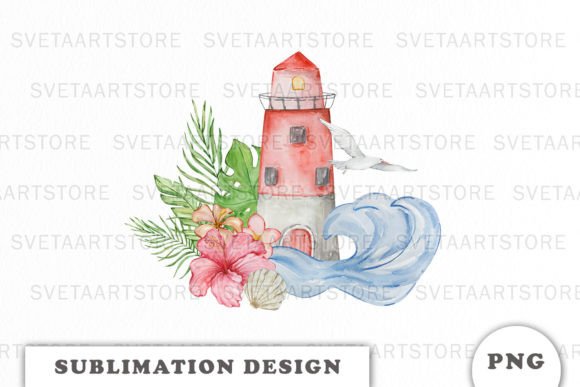
Watercolor Lighthouse with Wave PNG
As a designer who spends more time troubleshooting stitch density than admiring finished products, I approach every new asset with a healthy dose of skepticism. When Watercolor Lighthouse with Wave PNG landed in my inbox, I didn't just see a pretty image; I saw a potential challenge for my embroidery machine. The prompt describes this as a digital product in PNG format at 300 dpi, featuring a watercolor lighthouse, waves, and tropical floral elements. While the file itself is a raster graphic intended for sublimation or print, the question remains: how does this translate into a tangible, stitched reality? Can this delicate watercolor aesthetic survive the rigors of thread tension and fabric friction?
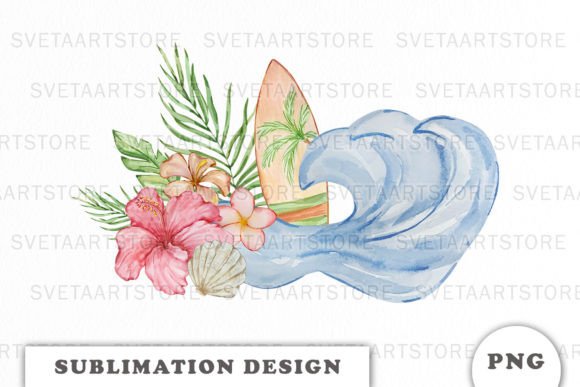
My first impression of the design is one of coastal serenity mixed with botanical vibrancy. The watercolor style suggests soft edges and blended hues, which immediately raises red flags for traditional satin stitch work. In the world of machine embroidery design, hard lines usually equal clean stitches, but soft gradients often result in muddy thread colors if not digitized correctly. However, seeing the layout, I can envision this working beautifully as a custom apparel piece or a boutique home decor item. The combination of the lighthouse, the rolling wave, and the tropical flowers creates a narrative that feels like a summer escape, perfect for a handmade product line aimed at vacationers or beach lovers.
Let's imagine a real-world scenario to test the viability of Watercolor Lighthouse with Wave PNG. Picture a small shop owner preparing for the holiday season. They want to create a limited run of embroidered tote bags to sell at a local craft fair. The goal is a unique, personalized gift that stands out from mass-produced items. If they were to use this design, the visual appeal would be immediate. The tropical floral accents add a pop of color that contrasts nicely against a natural canvas bag, while the lighthouse serves as a strong focal point. Customers browsing the table would likely stop because the imagery evokes a sense of nostalgia and calm. It transforms a simple tote into a story about a favorite beach memory.
However, translating this digital illustration into a physical embroidery project requires careful planning. The design falls under the category of Illustrations and Graphics, but for embroidery, we must treat it as a complex composition. If the user intends to stitch this directly, they need to consider how the watercolor effect will be rendered. A standard satin stitch might look too blocky for the soft washes of the paint. Instead, this design might benefit from a mix of fill stitch for the solid areas of the lighthouse and running stitch or very fine satin stitches for the wave crests and flower petals. Without a specific digitization file provided, relying on the PNG alone means the creator must understand how to convert these visual cues into thread paths.
The choice of fabric is equally critical. For a project like a sweatshirt embroidery piece, the heavy cotton blend provides a stable base that can handle the texture of a detailed design. But if you attempt this on a thin, stretchy fabric like a fitted t-shirt or a lightweight linen, the risk of puckering increases significantly. The watercolor style implies a lighter touch, yet the tropical flowers suggest multiple layers of detail. This could lead to a high stitch density that makes the fabric stiff and uncomfortable. To avoid ruining a client's garment, testing on scrap fabric first is non-negotiable. You need to verify that the stabilizer chosen can support the weight of the threads without distorting the delicate curves of the wave.
There are also specific scenarios where this design should be used with caution. Small hoop sizes present a major hurdle. The intricate details of the tropical flora and the subtle shading of the watercolor lighthouse may get lost if the design is scaled down too much. On a tiny cap brim or a baby onesie, the wave might turn into an indistinguishable blob. Similarly, dark fabrics pose a challenge. Watercolor designs rely heavily on lightness and airiness; placing them on a black hoodie without a significant underlay or white backing layer could make the colors appear dull and flat. Furthermore, if the final product is an embroidered patch meant for frequent washing, the loose, painterly edges of the watercolor style might fray over time unless the digitization includes a tight border or blanket stitch edge.
From a business perspective, using Watercolor Lighthouse with Wave PNG effectively can boost customer trust and brand consistency. Buyers on platforms like Etsy often look for uniqueness. A well-executed version of this design signals professionalism. It shows that the seller understands the limitations of the medium and has taken the time to ensure the finished product looks as good as the digital mockup. If the stitching is clean, the colors are vibrant, and the placement is centered, the perceived value of the item skyrockets. Conversely, a sloppy execution can damage a craft business reputation quickly. Therefore, checking thread color contrast is vital. You must ensure that the thread shades selected mimic the original watercolor palette without clashing with the background fabric.
For those looking to create digital product previews or printable mockups, the 300 dpi resolution of the PNG is excellent. It allows for crisp images in listings, giving potential buyers a clear idea of what the custom apparel will look like before they commit. However, it is crucial to manage expectations. The listing should clearly state whether the purchase includes the digital file for printing or if it is a reference for a custom embroidery order. Confusion here can lead to returns and negative reviews.
Before committing to a full production run, I strongly advise reviewing the design assets in black and white. This helps identify if the contrast between the lighthouse tower and the wave is sufficient. If the grayscale values are too similar, the depth of the image will vanish once stitched. Additionally, inspecting small details is essential. Do the flower centers have enough definition? Will the tip of the lighthouse beam stitch cleanly? If the original file lacks vector data, the edges might appear jagged when zoomed in, requiring manual cleanup or re-digitizing.
Finally, always confirm licensing terms. Whether you are selling commercial embroidery projects or creating personalized gifts for friends, understanding the rights associated with the embroidery file is paramount. Some licenses allow for unlimited sales of finished goods, while others restrict commercial use entirely. Ignoring these terms can lead to legal issues for your small shop product line.
In conclusion, Watercolor Lighthouse with Wave PNG offers a charming aesthetic that fits perfectly into the realm of nautical and botanical themes. It has the potential to elevate items like aprons, pillow covers, and tea towels. Yet, its success depends entirely on the skill of the embroiderer and the quality of the digitization. By treating it as a serious design challenge rather than just a pretty picture, creators can produce stunning results that resonate with customers. The key lies in respecting the medium, testing thoroughly, and delivering a handmade product that honors the original artistic vision.